A word for many journeys
The African diaspora includes people of African origin who live outside the African continent. It is a way to describe a relationship to ancestry, place and community, not a single nationality or one shared experience. The African Union’s definition includes people of African origin living beyond the continent regardless of citizenship or nationality, with a willingness to contribute to Africa’s development and the African Union. The AU explicitly includes both older and more recent migrations. Its definition offers a useful starting point, while people may describe their own identity in different ways.
Historic connections
Some diaspora communities were formed through forced displacement, including the transatlantic slave trade. Descendants built cultures and political communities in the Americas, the Caribbean and elsewhere over generations. Their connection to Africa is not measured by whether they know an exact ancestral country. It can live in family memory, cultural practices, political solidarity and the relationships people choose to build today. The African Union’s account recognizes this historic diaspora alongside people who moved more recently.
Newer journeys
Other people left African countries in recent decades for education, work, safety or family. Their children may grow up with more than one home and more than one way to name themselves. A person born in the United States to Ghanaian parents, someone who moved from Sudan, and an Afro-Caribbean person whose family has lived in the Caribbean for centuries may have different histories. None needs to be flattened into the other. The word diaspora makes room for connection without asking everyone to tell the same story.
What it means at NoirUnited
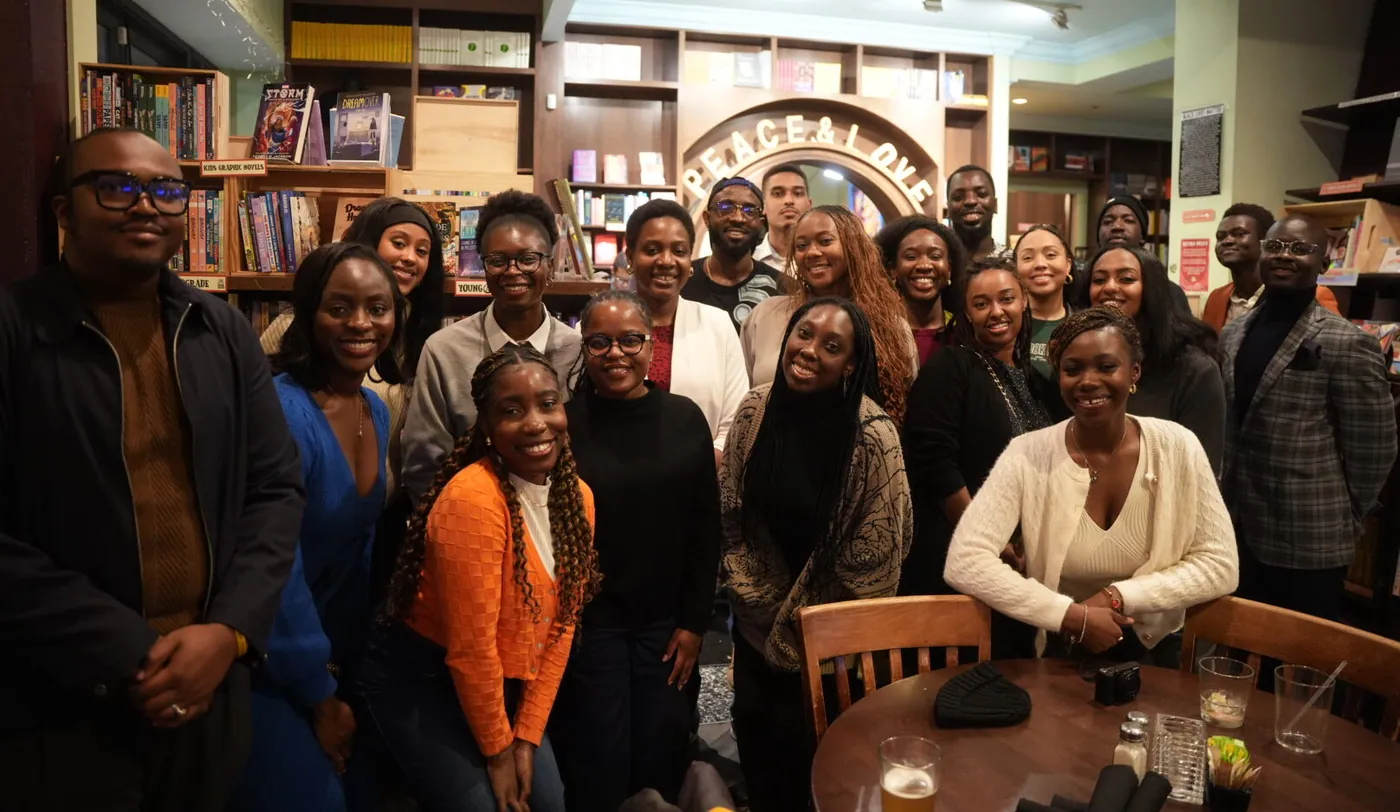
NoirUnited brings African Americans, Afro-Caribbeans, African immigrants and their children into a shared community. We also work with people living on the continent; the phrase Africa and the diaspora keeps that relationship visible. In the first Voices of the Diaspora conversation, Melvin P. Foote describes the diaspora broadly and urges people from different backgrounds to meet, listen and work together. His account is one speaker’s view, and it reflects the inclusive community NoirUnited wants to build.
In practice, connection can start small. Read an Insight about a place or issue you do not know yet. Watch a conversation and ask what its guest learned from organizing. Join an event, listen to the people closest to a problem, or help a team carry out a community-led project. The Youth and Education pathway shows how learning, membership, leadership and representation can build on one another. You do not need to claim a single story for the whole diaspora to take part.
Sources
- African Union. Diaspora & Civil Society Engagement. Definition and inclusion of historic and modern diaspora.
- NoirUnited International. Voices of the Diaspora: Melvin P. Foote. Recorded conversation and written lessons.
- NoirUnited International. Youth and Education. The learn, join, lead and represent pathway.
Last reviewed: November 2026.